
Best Pilonidal Sinus Surgery in Jaipur
Advanced plastic surgery technique to permanently cure pilonidal sinus.
- Permanently cure Pilonidal Sinus Pain
- Advanced Plastic Surgery technique for immediate cover.
- No need for long painful dressings.

Trusted by 1000+ patients
Book Your Free Video Consultation. Hurry, Limited Slots!!
Why would you need Pilonidal Sinus Surgery?
Pilonidal Sinus causes significant psychological and emotional problems.
Chronic Pain of Pilonidal Sinus
Pilonidal cysts often cause persistent pain, especially when sitting or moving. Surgery is necessary to alleviate this pain and improve the patient’s comfort and quality of life.
Recurrent Infections and Abscesses
Pilonidal cysts are prone to infections, leading to the formation of abscesses that can cause significant pain and drainage issues. Surgery removes the cyst and prevents these recurrent infections.
Social Isolation
The pain and discomfort from pilonidal disease can severely restrict daily activities and mobility. Surgery helps restore normal function, enabling patients to resume their regular activities without hindrance.
Psychological and Social Impact
The chronic pain, drainage, and recurrent infections associated with pilonidal disease can lead to significant psychological distress and social embarrassment. Surgery will help improve mental well-being and social confidence by resolving these issues.
What Pilonidal Surgery (with plastic surgery) can do for you?
- Relieve Chronic Pain
- Prevent Recurrent Infections
- Improve Mobility
- Enhance Quality of Life
- Eliminate Drainage and Odor
- Accelerate Healing
- Minimize Complications
- Enhance Mental Well-Being
- Permanent Solution
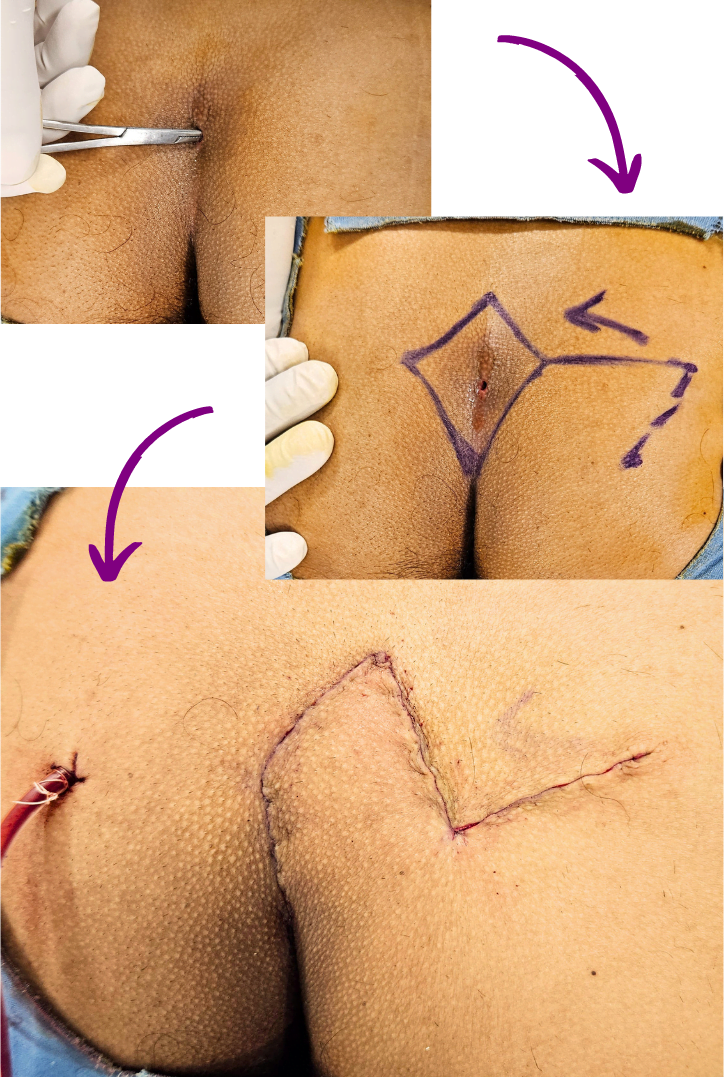
Limberg flap plastic surgery closure technique vs Traditional Lay-Open Pilonidal sinus surgery
Limberg Flap Plastic Surgery Closure
- Procedure: The sinus is excised, and the defect is closed with a rhomboid (Limberg) flap of skin and subcutaneous tissue.
- Healing Time: Faster healing time, usually within 2-4 weeks due to primary closure of the wound.
- Post-Operative Care: Requires less frequent wound care, with follow-up visits to monitor healing.
- Pain and Discomfort: Generally associated with less post-operative pain and discomfort due to the closed wound.
- Recurrence Rate: Lower recurrence rate due to complete excision and primary closure with the flap.
- Cosmetic Outcome: Better cosmetic outcome with less noticeable scarring due to the flap closure.
- Hospital Stay: May require a slightly longer hospital stay, typically 1-2 days.
- Suitability for Complex Cases: More suitable for complex or recurrent cases, as it provides robust closure and minimizes tension on the wound.
- Infection Risk: Lower risk of post-operative infection as the wound is closed and protected.
- Patient Mobility: Faster return to normal activities and work due to quicker wound healing.
Lay-Open Method
- Procedure: The sinus is laid open, and the wound is left to heal by secondary intention (from the bottom up).
- Healing Time: Longer healing time, typically several weeks to months as the wound heals gradually.
- Post-Operative Care: Requires regular wound dressing changes and cleaning to prevent infection and promote healing.
- Pain and Discomfort: May involve prolonged pain and discomfort due to the open wound.
- Recurrence Rate: Higher recurrence rate, as the open wound may be more prone to re-infection.
- Cosmetic Outcome: Potential for noticeable scarring due to the open healing process.
- Hospital Stay: Often performed as a day-case or with a short hospital stay.
- Suitability for Complex Cases: Suitable for simple, less extensive cases of pilonidal sinus.
- Infection Risk: Higher risk of post-operative infection due to the open wound.
- Patient Mobility: Limited mobility and prolonged recovery period due to open wound management.
Kalpana Aesthetics is a Plastic Surgery Clinic That You Can Trust
Kalpana Aesthetics is a leading plastic surgery clinic in Jaipur, India, led by Dr. Vishal Purohit, a highly qualified plastic surgeon. We offer a variety of cosmetic surgery procedures.
The clinic’s mission is to empower patients to achieve their desired look and boost their confidence.
We have performed over 1000 successful Pilonidal Surgeries in the past 5 years.
Kalpana Aesthetics welcomes you to discuss personalized treatment plans.
Frequently Asked Questions (Answer Videos)
Pilonidal sinus surgery is a procedure to remove a pilonidal sinus, a small abnormal tract (tunnel) that forms in the skin near the tailbone (sacrum) at the top of the buttocks. This sinus can become infected and cause a lot of pain, discomfort, and the drainage of pus.
Types of Surgery:
There are several types of pilonidal sinus surgery, each with its own advantages and disadvantages. The best option for you will depend on the severity of your condition and your surgeon’s recommendation. Here are two common types:
- Incision and drainage: This is a simpler procedure typically used for an abscessed sinus. The surgeon makes a small incision to drain the pus and remove any infected tissue. The wound is often left open to heal from the bottom up.
- Excision: This is a more extensive procedure that removes the entire sinus tract and surrounding tissue. The wound may be left open to heal naturally (open healing) or closed with stitches (flap surgery). Flap surgery can further be categorized based on the specific technique used to close the wound.
What to Expect During Surgery:
- The surgery is usually performed under general anesthesia (you’ll be asleep) or spinal anesthesia (you’ll be numb from the waist down).
- The surgeon will make an incision in the skin over the sinus tract.
- They will then remove the sinus tract and any infected tissue.
- Depending on the type of surgery, the wound may be left open to heal naturally, packed with gauze, or closed with stitches.
- The entire procedure typically takes 30 minutes to 1 hour.
Recovery:
- Recovery time can vary depending on the type of surgery you have. Open healing generally takes longer than closed healing with stitches.
- You can expect some pain and discomfort after surgery, which can be managed with medication.
- It’s important to keep the wound clean and dry and to follow your doctor’s instructions for wound care.
- You may need to wear a dressing or sit on a special cushion to help with healing.
- It’s usually recommended to avoid strenuous activity for several weeks after surgery.
Additional Points:
- Pilonidal sinus surgery is typically an outpatient procedure, meaning you won’t need to stay overnight in the hospital.
- The success rate of pilonidal sinus surgery is high, but there is a risk of recurrence.
It’s important to discuss the specific details of your surgery with your doctor, including the type of surgery planned, the risks and benefits, and what to expect during recovery.
A pilonidal sinus is a small abnormal hole or tunnel that forms in the skin, typically at the top of your buttocks, in the cleft between your cheeks. It can sometimes become infected and is quite painful.
key aspects of a pilonidal sinus:
- Location: It most commonly occurs in the Sacrococcyx region, which is the area at the bottom of your spine where your tailbone is located.
- Formation: It’s believed to develop when loose hairs (often shed from other areas) burrow back into the skin in this area. Friction from sitting or tight clothing can contribute to this process. The body reacts to the hair as a foreign object, forming a cyst or pocket around it. Over time, this pocket can become inflamed and infected, creating the sinus tract (tunnel).
- Symptoms: A pilonidal sinus may not cause any problems at first. However, if it becomes infected, you might experience pain, swelling, redness, drainage of pus or blood, and an unpleasant odor.
- Diagnosis: Diagnosis is usually done through a physical examination of the area. In some cases, additional tests like an MRI or ultrasound may be needed to determine the extent of the sinus tract.
It’s important to note that not everyone with a pilonidal sinus will need surgery. Treatment depends on the severity of the condition.
The exact cause of a pilonidal sinus isn’t entirely clear, but there are several factors believed to play a role:
Hair Ingrowth: It’s thought that ingrown hairs are a major contributor. Friction from clothing or sitting for long periods can push loose hairs (either growing in the area or shed from elsewhere) into the skin at the top of the buttock cleft (sacral cleft). The body reacts to these hairs as if they were foreign objects, forming a cyst (sac) around them.
Friction and Pressure: Activities that cause friction in the area, like sitting for extended periods, cycling, or certain sports, can irritate the skin and potentially contribute to hair penetration. Tight clothing can also exacerbate the issue.
Hormonal Changes: Pilonidal sinus typically occurs after puberty, suggesting hormonal changes might play a part.
Anatomy: Some people have a deeper natal cleft (buttock crease) which might trap hairs more easily.
Here’s a breakdown of how these factors might come together:
- Friction or pressure forces a hair into the skin.
- The body perceives the hair as foreign and initiates an immune response.
- This immune response creates inflammation and a cyst around the hair.
- Over time, the cyst can become infected, leading to a pilonidal sinus.
It’s important to note that not everyone with ingrown hairs or a deep natal cleft will develop a pilonidal sinus. These factors likely combine to increase the risk for some individuals.
Diagnosing a pilonidal sinus is typically a straightforward process and often doesn’t require any fancy tests.:
1. Medical History and Symptoms:
The doctor will begin by asking you about your symptoms. This might include:
- Pain, especially when sitting or standing
- Swelling or redness in the buttock crease
- Drainage of pus or blood from the area
- Presence of a visible pit or opening in the skin
They’ll also inquire about your medical history and any activities that could increase your risk, such as having a physically demanding job or sitting for extended periods.
2. Physical Examination:
The doctor will then perform a physical exam, focusing on the area at the top of your buttocks. They’ll visually inspect the area for any signs of a pilonidal sinus, such as:
- A small pit or opening in the skin
- Swelling or redness
- Drainage holes
In some cases, the doctor might gently press on the area to see if pus drains from any openings.
3. Imaging Tests (Not Always Necessary):
Imaging tests are usually not required for diagnosing a pilonidal sinus. However, in some situations, your doctor might recommend them if:
- The diagnosis is unclear.
- There’s a concern about an abscess or other underlying condition.
- They’re planning surgery to determine the extent of the sinus tract.
Imaging options might include:
- Ultrasound: This can help identify abscesses or fluid collections.
- CT scan: This can provide a more detailed view of the sinus tract and surrounding tissues.
- MRI: Provide better soft tissue delineation.
Overall, diagnosing a pilonidal sinus is primarily based on a combination of your symptoms and a physical examination. Imaging tests are rarely necessary but might be used in specific cases.
Surgery isn’t always necessary for a pilonidal sinus, but it becomes the preferred course of treatment in several situations:
Recurring Infections: If you experience repeated pilonidal infections, surgery offers a more permanent solution. Chronic infections can be disruptive and painful, and surgery can significantly improve your quality of life.
Non-Healing Sinus: If the pilonidal sinus doesn’t heal on its own with conservative measures like warm compresses and antibiotics, surgery might be needed. A persistent sinus indicates a deeper issue that may require removal.
Severity of Symptoms: In cases where the pilonidal sinus causes significant pain, discomfort, or discharge, surgery can provide relief. A large or painful cyst can significantly impact daily activities, making surgery a viable option.
Complex Sinus Tract: If the pilonidal sinus has branched out into a complex network of tunnels (sinus tracts), simple treatments might not be effective. In such cases, surgery can ensure complete removal of the sinus and prevent recurrence.
Doctor’s Recommendation: Even if you haven’t had repeated infections, your doctor might recommend surgery if they believe the sinus is complex or unlikely to respond well to conservative methods. They will consider factors like your overall health and the severity of your condition.
Here’s a breakdown of the decision-making process:
- Initial Infection: For a first-time infection, a doctor might recommend conservative treatment like incision and drainage to remove pus and allow healing.
- Recurrence: If the infection returns, surgery becomes a more likely option to prevent future problems.
- Severity: The severity of symptoms also plays a role. If the pain and discomfort significantly impact your life, surgery might be recommended sooner.
Remember: It’s crucial to consult with a doctor to determine the best course of treatment for your specific case. They will consider factors like your medical history, the severity of your condition, and your overall health before recommending surgery.
There are several types of pilonidal sinus surgery, each with its own advantages and disadvantages. The best option for you will depend on the severity of your condition and your surgeon’s expertise. Here’s a breakdown of some common types:
Wide Local Excision: This is the most traditional method. The surgeon removes the entire pilonidal sinus and surrounding infected tissue. The wound is then left open to heal from the bottom up, often packed with medicated gauze. This approach has a high success rate but can be more painful and require a longer recovery time.
Excision with Closure: Similar to wide local excision, the sinus and infected tissue are removed. However, in this case, the surgeon attempts to close the wound with stitches. This can lead to a quicker recovery but has a higher chance of recurrence if not all the infected tissue is removed.
Limberg Flap Reconstruction: This is a more complex procedure used for larger or recurrent pilonidal sinuses. The surgeon removes the sinus and affected tissue, then uses a nearby flap of healthy skin to cover the open wound. This reduces tension on the wound and lowers the risk of recurrence, but requires a longer surgery and recovery period.
Minimally Invasive Techniques: Newer, minimally invasive procedures like video-assisted ablation of pilonidal sinus (VAAPS) and endoscopic pilonidal sinus treatment (EPSiT) are gaining popularity. These techniques use a camera and specialized instruments to visualize and remove the sinus tract with minimal incisions. This often leads to faster healing and less pain, but these procedures may not be suitable for all cases and might have a higher chance of recurrence compared to traditional methods.
Choosing the Right Surgery:
Your doctor will discuss these options with you and recommend the best approach based on your specific situation. Factors to consider include the size and complexity of your sinus, previous surgeries (if any), and your overall health.
The success of pilonidal sinus surgery depends largely on the specific technique used.:
Success Rates:
- Overall: In general, pilonidal sinus surgery offers a high success rate, with recurrence rates ranging from 13.8% to 32% within five years of surgery.
Recurrence Rates by Surgical Technique:
- Incision and Drainage: This is the simplest procedure, but also has the highest recurrence rate, around 40%.
- Limberg/Dufourmentel Flap: This technique involves removing the sinus tract and surrounding tissue, then closing the wound with a flap of nearby skin. It boasts some of the lowest recurrence rates, as low as 2%.
- Karydakis/Bascom Cleft Lift: Similar to the Limberg procedure, this technique removes the sinus tract and closes the wound with nearby tissue. Recurrence rates are also very low, around 5%.
- Primary Midline Closure: This method involves simply closing the wound after removing the sinus tract. It has the highest recurrence rate, reaching up to 16%.
Factors Affecting Success:
- Surgical Technique: As mentioned above, the type of surgery significantly impacts recurrence rates. Techniques that remove more tissue and involve flap reconstruction offer lower risks of recurrence.
- Experience of the Surgeon: A surgeon with extensive experience in pilonidal sinus surgery will likely achieve better outcomes.
- Patient Factors: Age, weight, and following post-operative care instructions can all influence recurrence risk.
Additional Points:
- Recurrence rates can vary depending on the study and how success is defined.
- Even with successful surgery, there’s a small chance of minor fluid collection under the skin.
- Following proper post-surgical care, like maintaining wound hygiene and potentially hair removal techniques, is crucial to minimize recurrence risk.
If you’re considering pilonidal sinus surgery, discuss these points with your doctor. They can advise you on the best surgical approach based on your individual situation and explain the expected success rate and recurrence risk.
Pilonidal surgery results are unfortunately not guaranteed to be permanent. While surgery aims to remove the pilonidal sinus completely, there’s a chance it can come back. Here’s a breakdown of the recurrence rate:
- Range: Studies show recurrence rates between 13.8% and 32% within five years of surgery.
- Factors affecting recurrence:
- Surgical technique: Procedures with open wound healing have lower recurrence rates compared to stitched closures [2].
- Incomplete removal: If some pilonidal tissue is left behind, it can lead to regrowth.
- Hair growth: Hair entering the wound can trigger recurrence.
Here’s what this means for you:
- Success is possible: Many people have successful surgery with no recurrence.
- Minimizing risk: Choosing the right surgeon and following post-operative care (like hair management) can significantly reduce your risk of recurrence.
- Long-term management: Even after successful surgery, some people might benefit from ongoing hair removal methods to further minimize the risk.
Additional points to consider:
- Severity: Recurrence rates might be higher for complex or recurrent pilonidal sinuses.
- Second surgery: If recurrence occurs, a second surgery might be necessary.
It’s important to discuss these details with your doctor. They can assess your individual situation, explain the specific risks and benefits of surgery for you, and recommend the best course of action.
In India, both health insurance and Mediclaim policies generally cover the cost of pilonidal sinus treatment, including surgery. However, there are some key details to understand:
Coverage specifics: The exact extent of coverage will depend on your specific insurance plan. It’s important to review your policy documents to understand:
- Amount covered: There might be a limit on the total amount your insurance company will reimburse for the surgery and related expenses.
- Cashless vs. Reimbursement: Some plans offer cashless hospitalization, where the hospital bills the insurance company directly. Others require reimbursement, where you pay upfront and claim the expenses later.
- Pre and post-hospitalization coverage: Many plans cover expenses like doctor consultations, lab tests, and medication for a period before and after surgery (typically 30-60 days).
Policy type: There’s a slight difference between Mediclaim and health insurance:
- Mediclaim: Typically covers hospitalization expenses related to the surgery.
- Health Insurance: Often offers broader coverage, including pre and post-hospitalization expenses, doctor consultation fees, and medications.
Here’s what to do to ensure smooth insurance coverage for pilonidal sinus surgery:
- Review your policy: Carefully read your insurance policy documents to understand coverage details for pilonidal sinus surgery.
- Contact your insurer: If you have any questions about coverage, contact your insurance company directly. They can clarify specific details about your plan and guide you through the process.
- Network hospitals: Some insurance companies have network hospitals where cashless hospitalization is facilitated. Check if the hospital you plan to visit is in your insurance network to potentially avail cashless treatment.
- Pre-authorization: Depending on your plan, pre-authorization from your insurance company might be required before surgery. Your doctor or the hospital can assist you with this process.
By understanding your insurance coverage and taking the necessary steps beforehand, you can minimize out-of-pocket expenses for pilonidal sinus surgery in India.
The cost of pilonidal sinus surgery can vary depending on several factors. Here’s a breakdown of what you can expect:
Cost Factors:
- Surgeon’s Experience: More experienced surgeons may charge higher fees.
- Hospital/Facility: Prestigious hospitals or surgical centers might have a higher cost compared to smaller clinics.
- Geographic Location: Costs can differ depending on the city or state where the surgery is performed.
- Type of Surgery: Minimally invasive laser surgery might be more expensive than traditional open surgery.
- Anesthesia: The type of anesthesia used (local vs. general) can affect the cost.
- Pre-operative Tests: Any diagnostic tests like blood work or imaging scans add to the overall bill.
- Post-operative Care: Medications, dressings, and follow-up appointments contribute to the final cost.
Cost Breakdown (Estimates):
- Diagnostic Tests: ₹500 to ₹5,000
- Surgeon’s Fees: ₹15,000 to ₹20,000+
- Anesthesia: ₹5,000 to ₹15,000
- Post-operative Medication: ₹500 to ₹5,000
Total Cost Range:
It’s difficult to provide a single number due to the factors mentioned above. However, in India, the overall cost of pilonidal sinus surgery can typically range from:
- Minimum: ₹40,000 (often for laser surgery in a good hospital)
- Maximum: ₹2,00,000+ (complex cases in high-end facilities)
Tips to Manage Costs:
- Get quotes from multiple hospitals or surgeons.
- Inquire about insurance coverage for the surgery and related expenses.
- Discuss payment plans with the healthcare provider.
- Ask about any hidden costs upfront.
Disclaimer: These are just estimates, and the actual cost can vary significantly. It’s crucial to consult with your doctor or surgeon to get a personalized cost estimate for your specific situation.
The duration of your hospital stay following pilonidal sinus surgery depends on two main factors:
Type of surgery: There are two common approaches to pilonidal sinus surgery:
- Simple excision: This is the less complex procedure and involves removing the sinus tract itself. In this case, the wound may be left open to heal naturally or stitched closed. An open wound requires more frequent dressing changes, but typically allows for discharge on the same day or after 1 night. A closed wound might require a slightly longer stay, potentially up to 2 nights, for monitoring.
- Limberg flap reconstruction: This is a more complex procedure used for larger or recurrent pilonidal sinuses. It involves removing the sinus tract and surrounding tissue, then using nearby healthy skin to cover the wound. This technique requires a drain to be placed to remove excess fluid, and patients typically stay in the hospital for about 2 nights after surgery.
Wound healing: Regardless of the surgical approach, your doctor will monitor the wound for signs of infection and proper healing before discharging you.
Here’s a breakdown of possible hospital stays:
- Simple excision with open wound: Same day or 1 night.
- Simple excision with closed wound: Up to 2 nights.
- Limberg flap reconstruction: About 2 nights.
Important points to remember:
- This is a general guideline, and your doctor will determine the optimal hospital stay based on your specific case and healing progress.
- Even if you go home the same day, you’ll likely need frequent follow-up appointments with your doctor for wound care and monitoring.
It’s important to discuss the expected hospital stay with your doctor during your pre-operative consultation. They can address your individual circumstances and provide a more accurate timeline for your specific surgery.
The recovery time after pilonidal sinus surgery can vary depending on several factors, including:
- Type of surgery: There are two main types of pilonidal sinus surgery: traditional excision and closure (tecc) and lipectomy with open wound healing (lido). Lido surgery generally has a shorter recovery time.
- Closure method: If the wound is stitched closed (tecc), it will take longer to heal compared to leaving it open to pack and heal gradually (lido).
- Severity of the sinus: A larger or more complex sinus may require a more extensive surgery and a longer recovery.
- Individual healing: Everyone heals at their own pace.
Here’s a breakdown of the typical recovery timeline:
- Overall: In general, expect a recovery period anywhere from 1 to 3 months for complete healing.
- Resuming activities: Most people can return to their regular activities within 2-4 weeks. This includes work, school, and light exercise.
- Wound care: You will likely need regular dressing changes and wound cleaning for the first few weeks.
- Pain management: You will be prescribed pain medication to manage discomfort after surgery.
- Restrictions: You may need to avoid strenuous activity, sitting for long periods, and sweating excessively for several weeks to promote healing.
- Follow-up appointments: You will have follow-up appointments with your doctor to monitor healing and remove stitches (if used).
Here are some additional points to consider:
- Laser surgery: Some studies suggest laser surgery may have a faster recovery time (around 30-50 days) compared to traditional surgery.
- Pain: Pain is usually manageable with medication and should gradually improve over time.
- Discomfort: You may experience some discomfort like itching, burning, or drainage from the wound site. This is usually temporary.
- Recurrence: It’s important to follow post-surgical care instructions and any preventative measures your doctor suggests to minimize the risk of recurrence.
Remember: This is a general guideline. Always follow your doctor’s specific instructions for your recovery after pilonidal sinus surgery. If you have any concerns about your healing process, don’t hesitate to contact your doctor.
The timeframe for resuming normal activities after pilonidal sinus surgery depends on several factors, including:
- Type of surgery: There are two main types of pilonidal sinus surgery: closed incision and open wound healing. Recovery is generally faster with a closed incision (taking 2-4 weeks). Open wound healing can take longer (4-8 weeks) as the wound needs time to granulate (fill in with tissue) naturally.
- Your overall health: People who are healthy and heal quickly will likely resume activities sooner than those with underlying health conditions.
- Your job: If you have a sedentary job (mostly sitting), you might be able to return to work sooner than someone with a physically demanding job.
Here’s a general breakdown of the timeframe for resuming activities:
- First few days: Focus on resting and wound care. You’ll likely be prescribed pain medication and antibiotics. Sitting for long periods can be uncomfortable, so use a doughnut cushion for support.
- 1-2 weeks: You may be able to return to work or school if your job is not too strenuous. Avoid lifting heavy objects, strenuous exercise, and prolonged sitting.
- 2-4 weeks (closed incision): Most people can resume most normal activities by this point, including light exercise.
- 4-8 weeks (open wound healing): This timeframe is more likely for open wound healing. You should still avoid strenuous activities and consult your doctor before returning to exercise.
Here are some additional things to keep in mind:
- Pain: Pain is normal after surgery, but it should gradually improve. Don’t hesitate to take your pain medication as prescribed.
- Wound care: Following your doctor’s instructions for wound care is crucial to prevent infection and promote healing. This might involve dressing changes, sitz baths, and keeping the area clean and dry.
- Exercise: Strenuous exercise can put strain on the healing wound. Gradually increase your activity level as tolerated and with your doctor’s approval.
- Sitting: Sitting for long periods can irritate the wound. Take frequent breaks and stand up to move around throughout the day.
- Returning to normal: It’s important to listen to your body and gradually return to your normal activities. Don’t push yourself too hard, and be sure to consult your doctor if you experience any pain, swelling, or drainage from the wound.
Remember, this is just a general timeframe. The best way to know when you can resume normal activities is to talk to your doctor. They will be able to consider your individual circumstances and advise you on the safest and most appropriate course of action.
Here’s a detailed explanation on how to prevent a pilonidal sinus from recurring:
Hygiene:
- Regular Cleansing: Washing the area daily with mild soap and warm water is crucial. Pay close attention to the natal cleft (buttock crease) where the sinus is located. Rinse thoroughly and pat the area dry instead of rubbing to avoid irritation.
- Hair Removal: Ingrown hairs are a significant contributor to pilonidal sinus formation. Consider hair removal methods like shaving, clipping, or waxing in the affected area. Shaving can be done regularly (once a week or more) to keep hair short and prevent ingrowth.
Reduce Friction and Pressure:
- Avoid Prolonged Sitting: Sitting for extended periods puts pressure on the tailbone area, which can irritate the pilonidal sinus. If your job requires sitting, take frequent breaks to stand up and move around. Consider using a donut-shaped cushion to distribute pressure differently while seated.
- Maintain Healthy Weight: Excess weight can put additional pressure on the natal cleft, increasing the risk of recurrence. Maintaining a healthy body weight can help reduce this pressure.
Other Preventive Measures:
- Laser Hair Removal: While not a guaranteed solution, laser hair removal can permanently reduce hair growth in the affected area, potentially lowering the risk of ingrown hairs and recurrence. Discuss this option with your doctor to see if it’s suitable for you.
- Loose-fitting Clothing: Tight clothing can irritate the pilonidal sinus area. Opt for looser-fitting clothing, especially underwear, to allow for better airflow and prevent chafing.
Remember:
- Early Detection: Regularly examine the pilonidal sinus area for any signs of recurrence, such as swelling, redness, or pain. Early detection and treatment can help prevent the sinus from becoming infected and requiring further surgery.
- Doctor Consultation: If you notice any concerning symptoms, don’t hesitate to consult your doctor to discuss the best course of action.
By following these practices, you can significantly decrease the chances of a pilonidal sinus recurring. It’s important to note that these are general recommendations, and the best approach for preventing recurrence may vary depending on your individual case. Always discuss preventive measures with your doctor for personalized advice.
 EN
EN  HI
HI